Sustenance! What is that?
Vitamins and minerals are important to prevent disease and retard aging.
Many, many books have been written about which vitamins and minerals we should all be taking. An early draft of my book “A Healer’s Handbook” had much information included in the chapters. I was uncomfortable with the information and removed it. It took months/years to assemble the information and get it in the manuscript. It took only a few minutes to delete it. I’ve never regretted that move.
Years later, the book is now out…without the information. I’m still happy with that decision.
That being said, I’m now going to share information about some nutritional supplements with you. This information is based on my own research, what I’ve learned over many years. I’m offering my professional opinion here. You may not, probably will not, agree with any or all I present. That’s okay. The whole subject is very controversial.
The controversy is based on differing opinions between science-based and belief-based groups. These 2 groups of people see supplements in different ways. Belief based people see supplements as natural products which:
promote health
overcome dietary deficiencies
are preferable to FDA products.
Science-based groups see supplements as being:
of questionable value
and of questionable safety.
I could continue on about this conflict for another 10,000 words…but I’m not.
There are many, many supplements out there. The questions to ask yourself are 2:
Which of these products should I take and how often?
I recommend that, whatever you choose, make sure the products come from reputable companies whose products are routinely tested by independent laboratories for purity. You want to be able to purchase a vitamin, mineral, or other supplement, composed of chemicals which are listed on the label.
You want your supplements to be manufactured by companies which have independent laboratories buy their vitamins or supplements off the shelf, test them in their own facilities, and publish the results.
There are many, many books out there recommending vitamins, minerals, etc. The authors of these books will list the products and then tell you how much and when to take them. I won’t duplicate this information. What I’m doing is telling you what I use, and why I use it. Nobody is paying me to recommend these products to you. I’m not selling them, either.
These are simply the best products I can find.
The first product is one that I feel virtually everyone should be taking.
Wiley’s Finest Wild Alaskan Fish Oil is an Omega-3 Oil. It’s processed from Alaskan Pollack grown in a well managed fishery. The fish is turned into oil and purified, then bottled and shipped out. This Omega 3 Oil is 100% American made.
If you can’t find Wiley’s Finest Wild Alaskan Fish Oil in a store near you, contact Village Apothecary, Woodstock, NY, 12498 and they’ll ship it to you.
I’m really sold on Omega 3 oils. If you are only going to take one thing…make it Wiley’s Finest Wild Alaskan Fish Oil.
Everyone recommends multivitamins. A multivitamin is a basic in our culture now. Like all the other health care professionals, nutritionists, etc. I recommend that we all, at least, take multivitamins.
I take multivitamins every day with lunch.
The multivitamin I take is manufactured in Boulder, Colorado by Nutriplex, a woman-owned, organic company. All Nutriplex products offer whole food nutrition with superior quality and nutritional standards. All Nutriplex products are formulated from evidence-based research.
The name of the Nutriplex multivitamin is Whole Food.
I take 3 Nutriplex products daily:
BFood
Whole Food
Promin.
Whole Food is the multivitamin that everyone recommends. .
BFood is a formula offering B-vitamin nutrition.
I take other nutritional products as well, but these are the basic ones I take. I rely on these products to do the job they need to do.
I hope you feel the same way about the supplements you take.
Thanks for reading this blog.
Please refer this article to your preferred social media network.
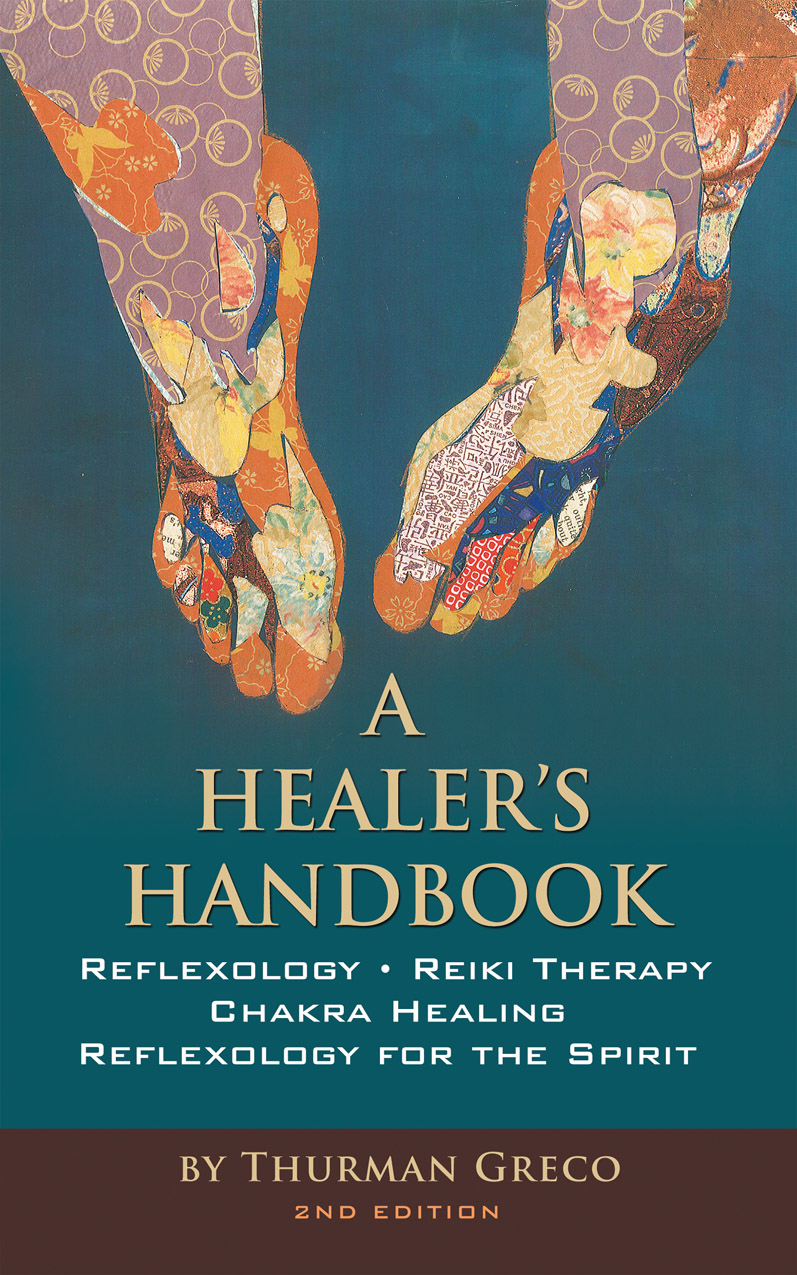
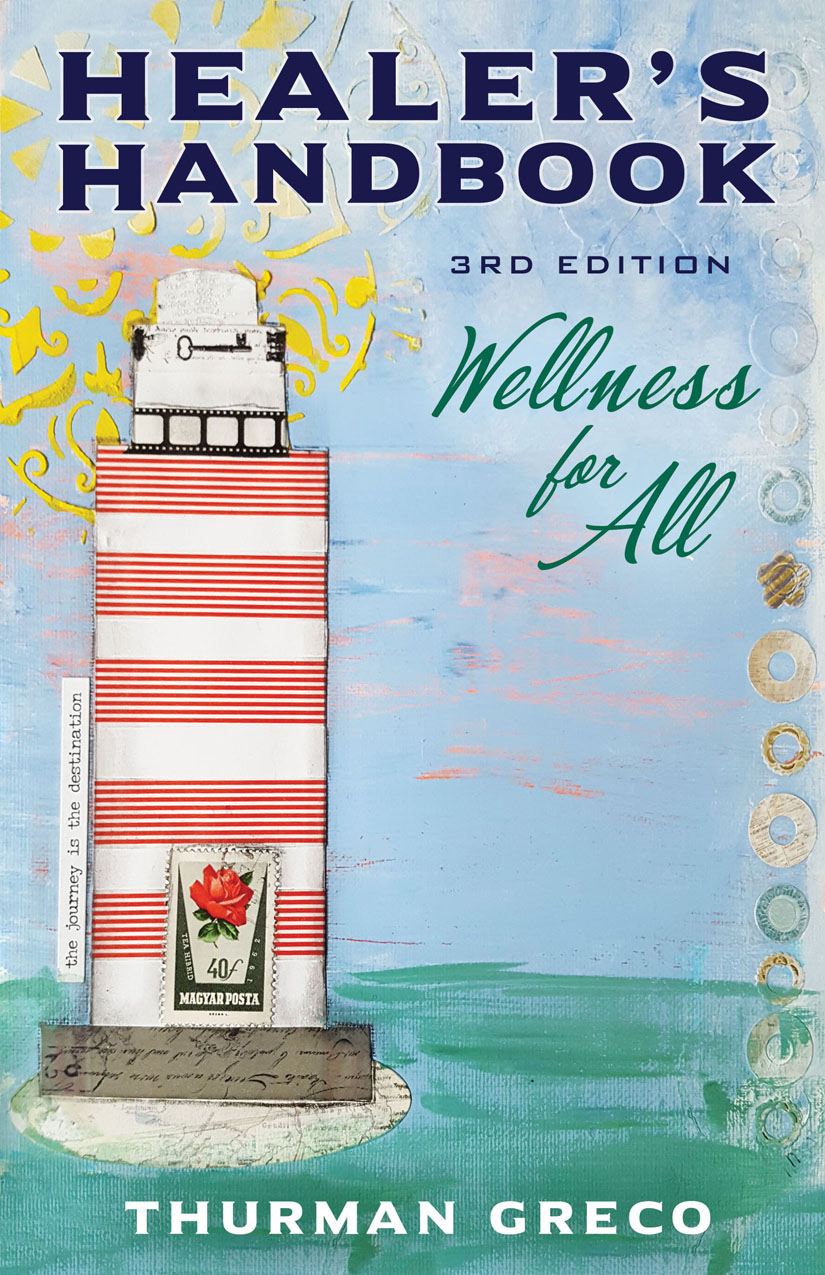
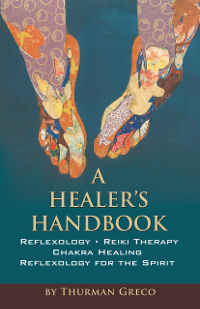
My book “A Healer’s Handbook” can be found on Amazon.
Thurman Greco
9 Things Reflexologists Don’t Do – and 5 Things we Do

Cure – Reflexologists do not cure. Instead, we promote healing, which can be a very
different thing, depending on the issue.
Patient – Reflexologists do not have patients. Physicians have patients. We have client partners. Some reflexologists have clients. But, whatever we have, we don’t have patients.
Recommend – We do not recommend. Instead, we work feet. We concentrate our energies on facilitating healing.
Advise – Reflexologists do not advise. We support our client partners in their healing path. Our work brings about homeostasis and synchronicity.
Examine – We do not examine. We read feet or hands or ears. .We notice where our findings are located. We work the feet, hands, ears, to bring about healing, homeostasis, and synchronicity.
Prescribe – We do not prescribe. That’s for physicians and other medical professionals. We rely on our hands and hearts to tell us what we find, to encourage healing, to facilitate homeostasis, to see synchronicity.
Dispense – We have nothing to dispense beyond the sessions we offer.
Diagnose – We do not diagnose. Physicians assist us in our healing efforts when they offer a diagnosis. This is important because it’s much easier to overcome a health issue if it has a name.
Administer – We do not administer anything. Instead, we read feet, offer sessions. Our noninvasive sessions have been offered to client partners for ages and ages.
Reflexology for the Spirit practitioners use our hands, brains, and hearts.
We do not need to over schedule our days to be successful. Twenty-five appointments a week is a full time practice for a Reflexology for the Spirit practitioner.
We are not wedded to advertising. Some of us don’t even have business cards. Referrals work well for us.
Because Reflexology for the Spirit works well with other modalities, many of us also practice yoga, massage, Reiki therapy, flower remedies. That means we are always growing, learning.
We honor our heritage. Reflexology for the Spirit practitioners take our traditions back many, many years:
Our history takes us far back in time with beginnings shrouded in mystery. What we do know is that early references to reflexology can be found in China, India, Japan, Egypt, Greece, North Africa, the Arabian Peninsula, the Mediterranean, South American and North America.
Historians tell us that Egyptians practiced both hand and food reflexology as early as 2500 BC. If you ever travel to Egypt, please visit the burial ground at Saqqara. The Physician’s Tomb there has a famous wall painting showing two people receiving reflexology.
If you ever find yourself in Japan, be sure to visit the Medicine Teacher Temple in Nara. There you’ll find a stone carving depicting the soles of Buddha’s feet in a carving dating to 790 AD.
In India, there are paintings of Vishnu, the Hindu god’s feet with symbols corresponding to several reflexology points.
Ayurveda is an ancient Indian form of medicine becoming popular in our country. Reflexology is incorporated in Ayurvedic medicine.
Reflexology has been recorded in ancient Chinese writings describing pressure being applied to fingers and thumbs.
From this glorious history and recent twentieth century trailblazers, we now have thousands of people practicing various kinds of reflexology throughout the world.
Reflexologists the world over work in tandem with physicians as our field moves toward integrative medicine in the twenty-first century. Integrative medicine works to heal the total person: the physical, mental, emotional, spiritual.
Reflexology has endured the test of time and is modern as tomorrow in the 21st !century.
Thank you for reading this blog. It has been a long time since I’ve posted an article. I have been working full time/overtime on the new book! It’s happening!
Thurman Greco
Woodstock, New York
Reflexology to Boost Your Client Partner’s Heart Health
 A staple Spa Treatment in your “tool kit” is the heart health session because both life quality and quantity depend on a strong and healthy heart for oxygen and nutrients.
Heart disease looms large in health issues. Heart disease is one of the five biggest killers in our nation. And, it doesn’t spring up overnight. Instead, it lurks silently in the background for years, decades, before it strikes.
Your client partners will understand how important a Reflexology Heart Health Spa Treatment is. I recommend regularly scheduled Heart Health Spa Treatments in conjunction with exercise. Think of this session as a monthly exercise booster.
This Spa Treatment is also good as a special throughout February. It can also be used as part of the bride’s spa day activity on her wedding day.
As always, have the healing space specially prepared with this session. Have an essential oil selected. Recommended essential oils for a Heart Health Spa Treatment include:
peppermint
rosemary
tangerine
thyme
ylang ylang
If your client partner is not happy with one of these oils, choose something compatible with his/her personality. Whichever oil you choose will guide you to the music, the decor.
Have your music selection playing when s/he arrives for the appointment.
Begin this session with a soothing foot bath if you possibly can. Soak your client partner’s feet in warm essential oil enhanced water for a few minutes before you begin to offer reflexology.
After your client partner spends a few minutes in a relaxing and soothing foot bath, have him/her move to your healing table or chair where you anoint him/her with your selected essential oil and wrap both feet in warmed towels.
Move to your client’s head and bring in Reiki therapy as you offer three holds to the head.
Now move down to your client partner’s feet where you offer five minutes of warm ups on the first foot. Using a good lotion which is scented with the chosen essential oil can be important here.
After offering the warm ups, offer five minutes of general reflexology. Your client partner is now ready to receive the Heart Healthy Reflexology Spa Session.
Work the following reflexes on the first foot for twenty minutes in the following order.
1. Work the Solar Plexus and the Liver
2. Work the brain reflex.
3. Work the lung reflexes.
4. Work the heart reflex.
5. Work the adrenal glands.
6. Return to the solar plexus and liver again.
After working these reflex points for twenty minutes on the first foot, offer five more minutes of general reflexology on this foot and finish up with five minutes of warm downs.
Now, move to the second food and repeat the process. This means you’ll offer five minutes of warm ups, five minutes of general reflexology and twenty minutes working the reflex points on the second foot.
You’ll be working the
solar plexus and liver
brain reflexes
lung reflexes
heart reflexes
adrenal glands
solar plexus and liver
Finally, offer five minutes of general reflexology and then five minutes of warm down.
When this is completed, offer your client partner ten minutes of Reiki therapy on the feet. Now…seal the Reiki therapy part of the session.
Let your client rest for a moment while you get a bottle of water for him/her.
Spend a few minutes with your client partner while s/he drinks the water and returns to “now”.
Thank you for reading this blog/book.
Please share this post with your preferred social media network.
Don’t forget to join the email list.
Thanks again for your patience while I finish the editing part of the book.
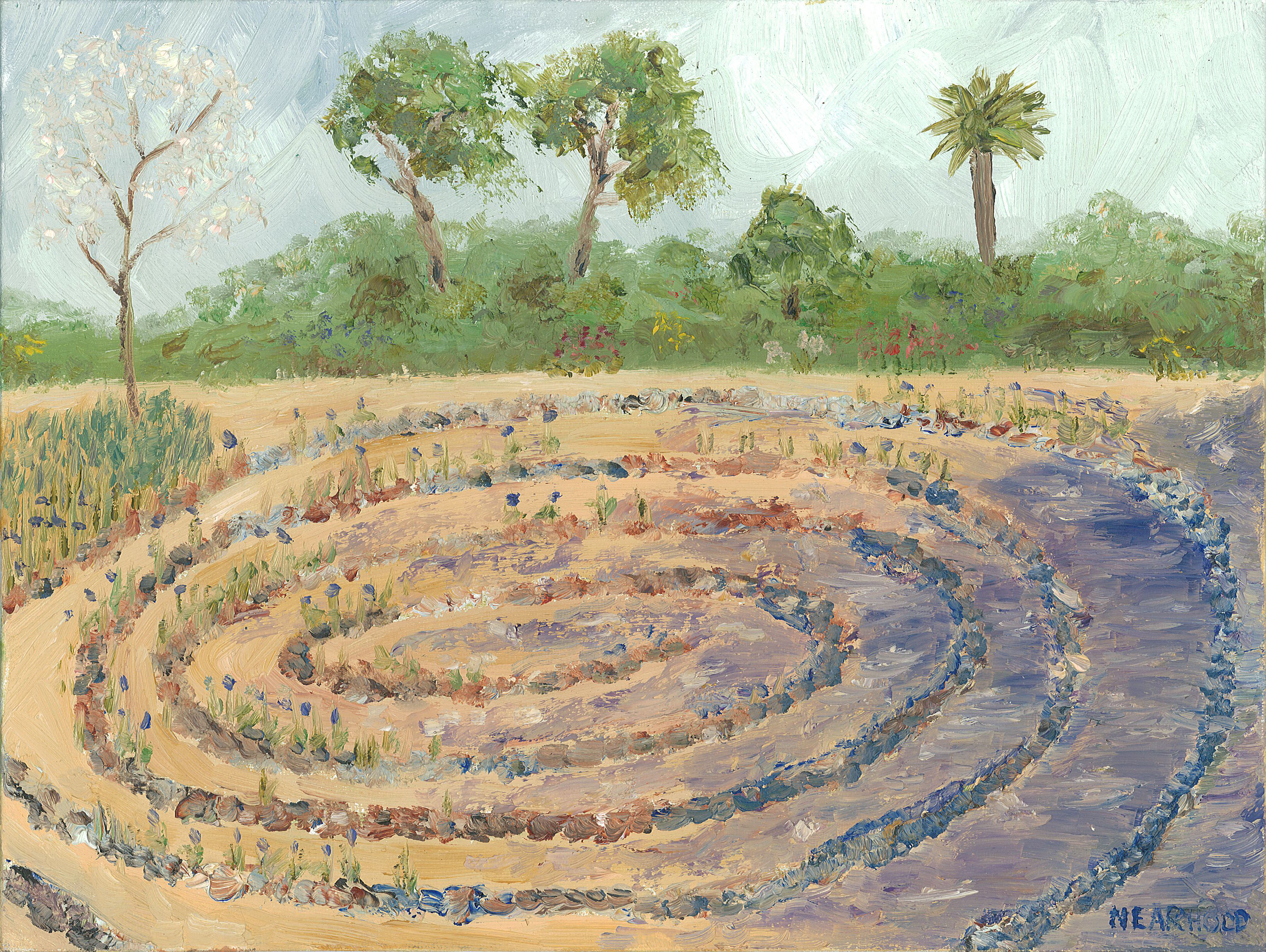
Media was created by Jennette Nearhood.
Thurman Greco
Reflexology for the Spirit

This week’s post of this blog will not happen. I’m using this week’s blog post time to work on the new reflexology book. I sincerely apologize for any inconvenience. I’m hopeful that this will be a short recess.
I plan to be back online with a blog post the first week in January.
Thank you to everyone for your support.
Thurman
The Fourth Chakra and Reflexology

The fourth Chakra reflex point is found on the ball of the foot. This is where we find the heart, lungs, breasts, thymus gland, shoulders.
Fourth Chakra issues include:
self esteem
personal power
intimacy
forgiveness
IT’S IMPOSSIBLE TO LEARN ABOUT FOURTH CHAKRA ISSUES WITHOUT QUESTIONING:
Are you able to express your emotions?
Do you need to protect yourself?
Do you have problems giving and receiving love?
Are you living a divided life?
Have you created a protective barrier around your heart?
Do you have trouble forgiving people?
Do you fear rejection?
Do you feel vulnerable?
Is it physically/emotionally painful to move forward in life?
Are you hiding your true self from others?
Grief is a fourth Chakra issue. We know as Reflexology for the Spirit practitioners that grief is housed in the ball of the foot – the heart – the lungs.
The fourth Chakra builds on the lower three Chakras as our thoughts and dreams take on language, expression. The fourth Chakra is where the moment of inspiration which took place in the first Chakra, now becomes entire paragraphs, both spoken and written.
The fourth Chakra links the spiritual and physical bodies as well as their issues. This is because the fourth Chakra is the our energetic center, working to fuse the physical and spiritual bodies.
When this happens, we are able to touch others as well as allowing them to touch our lives. The goal is unconditional love. A good way to get insight about unconditional love is to pay attention to cats and dogs, 2 creatures which practice unconditional love routinely.
Our heart Chakra pulls us into relationships involving
intimacy
risk
forgiveness
sensitivities
fear
grief.
Grief is an important fourth Chakra issue. Grief blocks fourth Chakra energy. Letting go of grief and wounding opens our hearts.
The state of the fourth Chakra is easily seen in one’s posture. People suffering with heart Chakra issues may be
round-shouldered
sunken-chested
stiff
rigid.
Unbalanced fourth Chakras can also been seen in people with heart and respiratory problems. Heart surgery can have a direct impact on the heart Chakra.
Meditations can be important. Meditations focusing on:
grief
heart opening
breathing
can help balance the fourth Chakra.
When you work with your client partner’s fourth Chakra, you offer the opportunity to help him/her release grief. It’s in the fourth Chakra that we find
an open heart,
the energy to give,
and a straighter body.
Thank you for reading this blog/book.
Please refer this article to your preferred social media network.
Don’t forget to join the email list.
Thurman Greco
Photo donated by Jennette Nearhood.
Today’s Post is…

not happening. I’m in writers’ boot camp! Wish me luck and success. Thank you, each and every one, for your support over the years. My goal is that this blog/book will improve as a result of my coming training efforts.
Thurman Greco
The Fifth Chakra and Reflexology

The fifth Chakra reflex point is located on the necks of the toes on both feet. This is where the throat, thyroid, neck, mouth, jaw, ears, teeth, and gums are located.
Fifth Chakra issues include:
listening
communication
truth
self expression
IT’S IMPOSSIBLE TO LEARN ABOUT FIFTH CHAKRA ISSUES WITHOUT QUESTIONING:
Am I afraid to express my opinions?
Do I ever lie about issues?
Am I unable to express my creative potential?
Do I never let others express themselves?
Do I ever voice my opinions?
Do I hide my creative potential?
Am I afraid to step into my power?
Do I lack self confidence?
Am I afraid to fail?
Do I use my voice to hurt others?
Do I use my voice to help others?
Can I keep a promise?
Do I express myself honestly?
Do I gossip?
Do I get a lot of sore throats?
Am I sometimes unable to speak?
Do I cough a lot?
Do I have gum and teeth problems?
Am I psychic?
Communication is the focus of the fifth Chakra. Focusing on the fifth Chakra develops listening on different levels.
The fifth Chakra is located on the pathway between the heart (the fourth Chakra) and the mind (the seventh Chakra). The throat Chakra develops issues when a person can accept a truth or concept in the fourth Chakra (heart) but not in the seventh Chakra (mind).
I saw a lot of this happening after the tragedy of 9-11. Many of my client partners began to suffer with throat Chakra problems.
With a balanced fifth Chakra, we are able to listen in subtle ways that we were unaware of before. We can then become more aware of energetic surroundings. We are aware of the harmonic vibrations around us.
As with the other Chakras, Reflexology for the Spirit sessions offer homeostasis,, which is the balance of all body systems.
Reiki therapy sessions balance the Chakras This is important when working the fifth Chakra.
Cleanses remove emotional, mental, and physical toxins. As toxins leave the body, space is made for subtle communication to take place. Intuitive communication becomes easier.
Meditation can facilitate a balanced throat Chakra – especially if you can meditate in silence. So much of our lives are bombarded with sounds. Give yourself a few moments when you focus inward. Give yourself a few minutes without bombarding sound. Try to set aside a few minutes when you do not talk, listen to voices, or mix with people.
On another meditation, take yourself out to the edge of the edge of the heavens.
It’s easy to tell how centered the fifth Chakra is by observing a person’s neck. Is the person in pain?
If your neck is uncomfortable, rotate your head slowly in different directions.
When you work with your client partner’s fifth Chakra, you offer him/her the opportunity to find inner peace through deep listening. The fifth Chakra is based on vibrations. Helping your client partner become aware of these sounds can offer dramatic change to his/her life. This is how the answer to the age old question is found: “What is my truth?”
Thank you for reading this blog/book. I am now accepting reflexology students. Please email: reflexologyforthespirit@gmail.com for information. Thanks!
Please refer this article to your preferred social media network.
Don’t forget to join the email list.
Thurman Greco
The Third Chakra and Reflexology

The reflex point for the third Chakra is the upper half of the instep, below the ball of the foot. This reflex point is found on both feet. Third Chakra issues include
anger
shame
victimization
self esteem
IT’S IMPOSSIBLE TO LEARN ABOUT THIRD CHAKRA ISSUES WITHOUT QUESTIONING:
How important is doubt in your life?
Can you make decisions?
How important is fear in your life?
Are you able to carry through decisions and plans to fruition?
Do you have to be right in every decision?
Do you always have to be the center of attention?
Do you lack willpower?
Do other people control your life?
Do you think for yourself?
Do you act on your own?
Can you survive on your own initiative?
Anger is a third Chakra issue because that’s where much anger is stored. Depending on how the Chakra is balanced, anger can range from no energy to excessive energy. Third Chakra anger focuses on self-esteem because the third Chakra governs our power.
We can feel this anger and need for power in our solar plexus, the home of the third Chakra in the body. This Chakra is where we feel “butterflies” when we are nervous as we develop our personal will.
The third Chakra is closely connected to Chakras one and two as energy moves up the spine from the base. As the energy reaches the third Chakra, it begins to take on a shape and a vocabulary as it finds its voice. The third Chakra is where we develop our own personal truth, formulate our own personal authority, and integrate personal power into our lives.
The third Chakra is the result of the development of the first and second Chakras. This is where we give voice to our truths.
Reflexology for the Spirit sessions offer homeostasis, the balance of all body systems.
Reiki therapy sessions balance the Chakras.
Meditation is important to a balanced third Chakra. An unbalanced third Chakra creates a person unable to manage power.
An unbalanced third Chakra affects one’s posture, body language, and spinal alignment. It’s difficult to separate the physical, emotional, and spiritual difficulties in this area. Yoga helps.
Physically, the third Chakra governs:
Stomach
Liver
Spleen
Pancreas
Gall Bladder
The third Chakra is a major power point. When you work with your client partner’s third Chakra, you offer an opportunity for the person to develop physically, mentally, emotionally, and spiritually.
Thank you for reading this blog/book.
Please refer this article to your preferred social media network.
Don’t forget to join the email list.
Thurman Greco
Calm…and Nurtured
To be as healthy as possible, your immune system must be calm and nurtured.
Your immune system is a warrior – fighting off dangerous and threatening diseases. Help your immune system protect you by making your life, the environment you live in feel safe.
Begin with the space you spend the most time in…your home.
Make sure your home/apartment/wherever you live is allergen free. That means the air you breathe is clean, the water you drink and bathe with is clean, and you have as little mold, mildew, and insect presence as possible.
Environmental pollutants and toxins irritate your immune system which means they are bad for your health. Exposure to unknown chemicals can negatively affect your entire life. The 3 most threatening toxins:
molds,
insects such as cockroaches,
dust mites.
Begin to calm and soothe your immune system by doing a walk-through of your home. Make a list of any and all things needing attention:
water stains,
trapped moisture
evidence of pesticides and rodents
mold.
Clean all carpets, rugs, upholstery, curtains, bedding to include blankets, throws, bedspreads.
Have your water tested.
Mask unwanted noise if you live on a noisy street.
After you have gotten rid of the toxins and pollutants, it’s time to make your home environment a peaceful oasis. This won’t take a lot of $$$. It will take attention instead.
Create places where sunlight can stream in during the day and where the area is dark at night. Fill your place with smells and aromas which will feed your soul:
fresh flowers,
home-baked bread
scented candles
a favorite essential oil
wind chimes
music you love..
Use colors in your surroundings which offer peace, calm, soothing feelings. The idea is to create a space which makes you feel happy the moment you enter it.
Create a meditation corner. It doesn’t have to be large – You only need enough room to sit or recline comfortably without being bothered. If you can have a space where you can put up your legs for a few minutes each day, you will be refreshed and nourished – something we all need.
Thank you for reading this blog/book.
Please refer this article to your preferred social media network.
Don’t forget to join the email list
Jennette Nearhood provided the photograph for this post.
9 Important Questions to Ask About Pain
 Ubiquitous, pain. Everyone suffers with pain occasionally. Some of us suffer with pain constantly.
Pain comes in many forms:
Pins and needles
Searing
Hot
Cold
Constant
Deep
Screaming.
Everyone has names for pain.
Reflexologists, whenever a client partner begins to discuss pain with you, ask the following questions:
How long have you had this pain?
If your pain is not constant, does it come and go on a certain or random schedule?
Do particular activities initiate the pain?
What does it feel like?
Does it have a shape?
What does it look like?
What does it sound like?
What does it smell like?
Is there a story connected to this pain? Do you know it?
Is there a word that will help you heal?
Now, speak to your pain.
Ask your pain if you can work together to heal.
Is there a word to help you heal? Pause a moment to receive this word.
Then, find out what color this word is going to be. Now, repeat this word several times as you experience the color bringing relaxation to your entire being.
As you experience this, know that relaxation is important to pain because when we relax, we heal.
Often, just going through the above questions offers relief. Sometimes we have pain which has a past life origin. These questions can help reveal this situation. People who have tried everything with no luck are able to have breakthroughs.
But, even if the questions don’t seem to offer immediate insight, they are very powerful and are quite helpful.
Reflexology can be a powerful pain management tool if used in the right way. In the near future, I’ll be offering a series of posts sharing pain management sessions.
Thank you for reading this blog/book.
Please share this article with your preferred social media network.
Please leave a comment.
Don’t forget to join the email list.
Media provided by Renee Ruwe
Peace and food for all.
Thurman Greco