Buyer Beware – 6 Things to Know About Eating Better

In another time I lived in the interior of Venezuela – 50 miles from headhunters in 1 direction and 50 miles from a grocery store in another direction.
Milk for my family was delivered weekly by a Spaniard who owned an area dairy. I got to know him and his cows very well. It wasn’t that I considered him to be so interesting or entertaining. I was afraid of getting milk infected with tuberculosis. I had 2 toddlers and I was doing everything I could to keep them healthy.
Most of us, when asked, will admit to eating a nearly perfect diet. Delve deeper, and you’ll find that everyone’s diet is different. You’ll also find many of the diets are not healthy…some are not even safe.
It’s hard to know which is the correct diet. There are thousands out there. Many are touted as being the best. We can go into a large book store or library and find an extremely generous selection of cookbooks, each promoting a different way of eating. Top off that with the TV Food channels and the internet and everything becomes confusing.
So, what do you do as a reflexologist when your client partner begins to discuss diet or ask questions about digestion issues?
I offer a few sane suggestions for your own diet as well as that of your client partners, friends, neighbors, and anyone else trying to eat better:
Eat whole foods that are fresh and locally grown. I realize that you may have heard/read this before but I offer new twists on the same old sentence.
Eating locally grown food is important. It’s important to not only know that the food is locally grown, but it’s important to know which farm the food came from.
Can you afford a CSA? If your household is too small, split a membership.
Eating locally grown or raised foods includes
fresh vegetables
fresh fruits
whole grains
beans
fish
lean red meat
dairy products.
When you eat whole, fresh, locally grown foods, you’ll be eating food which experiences less processing, packaging, and shipping.
Foods grown in your area can be picked later, and eaten sooner. Overall, this means a better product.
When I think of fresh foods, I think of health promotion. It’s much better to eat an apple from nearby than to eat pears, apples, strawberries or whatever from South America or China.
And, if you know the farm this food comes from, you’re even better off because you’ll know about the pesticides used. You’ll never be able to learn what pesticides were used on food that came from Chile or China, or any other foreign location, no matter what the label tells you. Our government sends few to no inspectors to faraway places to verify what they say they do.
When you eat whole, fresh, locally grown foods, you’ll be eating better quality food offering the opportunity to protect your heart, stabilize your blood sugar, boost your brainpower, and generally improve your health.
Farmers shipping their products long distances focus on growing foods that travel well as opposed to products that taste better.
Begin your quest for locally grown food at a farmers market.
Don’t be shy. Ask your grocery store produce manager where the food comes from. It goes without saying that we need pure foods if we can get them. Organic, non-GMO, etc., are important.
At the very least, buy organic when you can. Here again, it helps to know which farm the food comes from. The term “organic” doesn’t mean what it did in times past. Many farmers claim to sell organic foods today that could not make that claim in the past. This is because the government has relaxed the organic designation guidelines.
If you’re on a budget, it’s important for some foods to be organic. Foods needing to be organic include:
apples
bell peppers
celery
chard
cherries
domestic blueberries
imported grapes
kale
lettuce
nectarines
peaches
potatoes
spinach
strawberries
Foods that do not necessarily need to be eaten in the organic state include:
asparagus
avocados
cabbage
cantaloupe
eggplant
grapefruit
kiwi
mango
onions
pineapple
sweet corn
sweet onions
sweet peas
sweet potatoes
watermelon
We eat many foods over time. I’ve only listed a very few items. However, the 2 lists offer insight into what constitutes a food needing to be organic and a food that may not.
Staying away from boxed and canned foods is important. They are often filled with additives which are not good for the human body. Many boxed and canned items aren’t even foods. They’re products which have been manufactured to eat. In the 21st century, just because something is sold in a food store to eat doesn’t mean it’s a food.
Food shopping in today’s world not only involves selecting items which are foods – whole, fresh, and local – but also being careful where you buy these items. Just because a store claims to be health oriented doesn’t mean that everything it sells is nutritious or even safe.
Approach each item with a questioning attitude. Read the label. If there are a lot of words which are hard to pronounce, return the item to the shelf.
Your grocer is in business to make $$$. Food is put on the shelves to sell. Just because it’s on the shelves doesn’t guarantee that it’s healthy or even safe.
This doesn’t mean that eating can’t be fun. It can be. It’ll be even more fun once you know exactly what you’re eating.
If you can, buy your breads from a local bakery which uses organic whole grains.
Become knowledgeable about your dairy, meat, and fish products. If at all possible, stay away from fish that are farmed.
If you eat meat, eggs, cheese, try to get products coming from animals that are free range, organic fed.
Purchase eggs coming from cage free hens.
Ham, bacon, and smoked fish should have no synthetic nitrates or nitrites.
Meats should be hormone free, free range grazed, and antibiotic free.
I realize that not everyone has access to these foods. We can’t eat what we don’t have access to. I also realize that these foods may be expensive. We also can’t eat what we can’t buy. Everyone faces choices when it comes to food shopping. Staying away from processed foods can free up some funds for fresh, whole, local.
It’s okay to be a food snob only wanting the most nutritious, healthiest food available.
Thanks for reading this blogged book.
Please refer this post to your preferred social media network.
I hope you found this article helpful. Please leave your comments below and check out the other posts.
Don’t forget to join the email list.
Other blogs you may enjoy:
Peace and food for all
Thurman Greco
7 Ways to be Light, Vibrant, Joyful
 .Surround yourself with things, people who make you feel light, vibrant, and joyful.
This can be a variety of things. For some, this can be
colors,
music,
books,
plants.
But, whatever it is, surround yourself with things that make you feel great, good, vibrant, joyful.
You may find yourself painting your walls or bringing more flowers home or showcasing a shelf of your books. The important thing is that you are releasing endorphins when you seek joy, renewal.
As a reflexologist, let the good, vibrant, joyful attributes be visible in your practice and your healing space. This effort will reflect itself in what your client partners take away from your sessions.
Spend a little time becoming aware of these endorphin moment(s). Once you know what makes you happy, you can put more focus on that outcome. When you are focused on a joyful outcome, you can be happy for longer periods.
Laughing comes easier.
Gratitude comes easier.
You’ll also be able to focus on the things in your life that you enjoy. Your happiness will multiply then, because what you focus on grows. You will encourage homeostasis.
As you share your happiness, others will begin to enjoy these moments as well. So you’ll create a ripple effect for your friends, neighbors, family, client partners. This can have far-reaching consequences of the positive kind.
Happiness is a rare commodity these days. Find it. Share it. Spread it around.
One of the pluses of being light, vibrant, and joyful is that these attitudes don’t take a lot of $$$. Happiness comes with gratitude and a smile. It can begin with a small plant or a book by your favorite chair.
Enjoy sunrises and sunsets and delicious smells like grass and fresh leaves.
If you feel that being light, vibrant, and joyful is difficult, it’s time to do something for someone else. The happiest people I know are those who have learned to share a most precious commodity: a smile and a little time.
Tap into your creativity. This will allow you to relax, have more fun, and explore life’s wonders.
Thank you for reading this blog/book. This is a series of articles focusing on ways to enhance wellness for yourself, the reflexologist, and your client partners.
Please send a comment.
Please share this article with your preferred social media outlook.
Don’t forget to join the email list.
Peace and food for all.
Thurman Greco
Listen!
 What is your body telling you? Listen!
When you listen, all four parts of your self will tell you what you need to hear: Your physical, mental, emotional, and spiritual selves will speak to you.
Are you tired?
Do you suffer from a sleep deficit?
Are you unable to sleep because you are burning the candle at both ends?
Are you deeply troubled?
Are you studying for an exam?
Are you trying to get a promotion at work?
When do you need to rest?
Do you need to play?
How long has it been since you just had fun?
What is your work situation?
We all have cycles. What are yours?
When are you at your best?
Keep a regular, predictable schedule every day of the year. Listen! Your internal clock will develop a schedule of eating, sleeping, and exercising at the same time each day. Respect the regularity of this schedule.
Schedule some relaxation time each day. Give your brain a break. Let it review the day’s experiences. Allow your brain to turn events into memories. This will encourage the learning process. Allow your brain to refresh itself.
Listen! Every part of your body stores emotions, memories, thoughts, based on what the body part does for you. For example, your ears will store these emotions, memories, thoughts, that relate to hearing. Become more aware of events that contribute to issues or diseases in the particular parts of your body.
Find time to move your body at intervals throughout the day. This means taking the stairs whenever possible. Walk when you talk on the phone. Park farther away from your destination and walk to your destination.
When we ignore our bodies, stress, tension, fear, frustration, depression, anxiety, and disease set in.
As a reflexologist, you will improve both your life and your career significantly if you honor your circadian clock. Take a break every couple of hours to check in with yourself and see how things are going.
When you begin to honor your clock, you will find yourself keeping a regular schedule. This regular schedule is a tonic for some. For others, it is a wonder drug.
Your body will love you for this because it loves predictability. Stress is related more to lack of a schedule than to finances, marital problems, children, or work.
When you listen to your needs and offer your body predictability, you invite homeostasis into your life.
If you are new to this blog, I wrote a series of posts in which I offered suggestions and guidelines about how to listen to your body and also how to communicate with different parts of your body to bring about healing and homeostasis. You can find them in contents section of this blog. They were in late 2014 and early 2015. Most of the posts were entitled “Spirituality of……”
Teach your client partners about their circadian clocks. You will then improve their lives and careers. How cool is that?
Thanks for reading this blog/book.
I hope you found this guideline helpful. Please leave your comments below and check out the other posts.
Don’t forget to join the email list.
Peace and food for all.
Thurman Greco
Art provided by Jennette Nearhood
Why do they come to our tables? Homeostasis!

Why do they come to our tables? People visit a reflexologist searching for wellness and healing. Many have never thought about being in in control of their bodies and their health. Of course not, in today’s world everyone has so little time. No one has time to learn and absorb concepts about healing…especially when information overload is a way of life for us all.
They know their body is trying to tell them something on some level but they’re not sure what. For some the message comes in the form of a symptom:
painful feet,
clogged sinuses,
high blood pressure.
For others, it’s a much more subtle voice:
a spiritual message sent on a subtle wave length.
But, whatever the message, they make an appointment.
Reflexology for the Spirit offers homeostasis. When a person embraces this concept, life changes. Healing becomes a priority. Wellness is a journey. The person begins to heal on all levels.
The reflexology table is the hub of a wheel of growth. Marge D’Urso taught us a reflexologist needs to know much more than just where the points are.
THIS NEXT SERIES OF POSTS WILL ASSIST YOU, THE REFLEXOLOGIST, in your journey as you guide and assist your client partners on the path to wellness and healing: homeostasis.
THIS NEXT SERIES OF POSTS WILL ASSIST YOU, THE CLIENT PARTNER, on your path to wellness and healing: homeostasis.
This path is a process, not a pill.
Give homeostasis an opportunity to occur. When this happens, the process can be felt on several levels.
General relaxation throughout the body occurs when a person receives Reflexology for the Spirit regularly. This feeling is so rare in some that it takes several sessions before the client-partner even understands what the feeling is.
Over time, as different healing habits become a lifestyle, the body begins to heal itself. This concept can be new for a person embracing homeostasis….especially when a person begins sessions thinking there is no control over health at all.
Information gained in the coming posts and shared with your client partners will offer opportunities both you and your client partners to:
improve cardiovascular health,
lower your risk of diabetes,
prevent osteoporosis
and learn about many other health benefits.
The feet themselves will begin to improve.
Finally, an improved sense of emotional well being takes place. The result is an increased awareness of one’s body and how it feels when healing occurs.
You, the reflexologist, have an opportunity to profoundly influence health, longevity, and well-being as you inspire and guide your client partners.
Thanks for reading this blog/book.
Please refer this article to your preferred social media network.
I hope you found this helpful. Please leave your comments below and check out the other posts.
Don’t forget to join the email list.
Peace and food for all.
Thurman Greco
Jennette Nearhood provided the artwork.
The Spirituality of the Sinuses
Our sinuses are very spiritual. They:
are connected to our sense of smell which moves back and forth through time as aromas and scents are drawn in through our nose.
give resonance to the voice, so important to communication.
are front line protection against foreign invaders as they prevent dust, germs, and other foreign particles from entering the lungs.
reduce the weight of the skull because they are empty cavities. This is important because the skull sits on small neck bones.
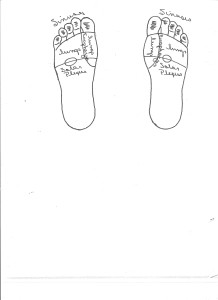
A gift you can give to your sinuses is work them in self-administered reflexology sessions. Sinuses love reflexology, especially hand reflexology.
Short meditations also help the sinuses offer more protection.
Begin by finding a quiet, safe place.
Breathe in and out consciously for about 2 minutes. Breathe slowly and mindfully. Allow your breathing to become regular, grounded.
As you breathe, allow your sinuses to clear and heal. Offer your sinuses an opportunity to function at their maximum health, and well-being level.
At this point, speak to your inner self. Give yourself permission to feel safe, protected, lovingly cared for….out of harm’s way.
Now, relax for a minute or two. Close your eyes and visualize receiving caring attention and support.
End this session by moving slowly for a minute.
Thank you for reading this blog/book.
Please share this article with your preferred social media network.
Please send a comment.
Don’t forget to join the email list.
Peace and food for all.
Thurman Greco