What is Healthy?

What is healthy, anyway? We’re all concerned about our health on some level. We try to eat better, exercise more, sleep more. There are many components to good health, but, at it’s basic level, what is healthy, anyway?
For starters, a leaner body is healthy. But, losing weight and keeping it lost can seem like chasing the Fountain of Youth.
And, of course, there is the old story about Ponce de Leon finding it. The Fountain of Youth headquarters is in St. Augustine, Florida. You can go there and visit it in a park setting. But, you don’t need to travel all the way to St. Augustine to visit the Fountain of Youth. Branches are right in your own community, maybe even in your neighborhood. Every fitness center around is a branch of the fountain of youth. All you have to do is join up and use a fitness center. The sidewalk in front of your home or office is also a branch of the fountain of youth. All you have to do is get out there and walk briskly for thirty minutes or so every day.
Using your fitness center regularly or walking briskly for a half hour each day will decrease your risk of developing diabetes. This will keep you on the path toward good health. And, while you exercise to protect yourself against diabetes, skipping sugary soft drinks and juices will help. And, if you have diabetes, find out from your health care professional how much exercise you need every day to strengthen your body as you work with this disease.
Trips to a fitness center and/or the healthy walks will help you develop a healthier heart and will help you reduce your risk of heart disease.
What is healthy? Visiting your local fitness center or walking helps you feel, look, and act better. It will also reduce your cholesterol levels. Add some dietary tips when you want to be healthy and you’re thinking of cholesterol. Use olive oil more often when you substitute it for less healthy oils, for example.
A brisk daily walk will strengthen your bones. You can also garden. Actually, the more things you can think of that will get you off your seat and on your feet, the better. And, while you’re getting off your seat, try walking a little faster on the sidewalk and running a little faster on the treadmill. A more intense workout will help you feel better.
What is healthy? Lowering your stress level is one way to improve your health. Hug your pet. And, if you don’t have a pet, can you hug a neighbor’s pet? Can you go to your local pound and walk a dog there? If you go to your pound and walk a dog briskly for a half hour, you’ll be doing two beneficial things at once!
And, what about your memory? Blueberries help. So do crosswords, scrabble, your local newspaper.
And, finally, what is healthy? Connection is healthy. Humans like to be connected to one another. This can mean different things to different people. Taking a class in something will help. Meeting the other people at the fitness center will strengthen your connection to your community. There are a million ways to get connected. A church, synagogue, or temple is there waiting for you. The important thing is to share yourself.
So, here are a few ways to help you define what is healthy for yourself. Find something you like and share yourself.
Thank you for reading this blog post. Please share it with your preferred social media network.
Thurman Greco
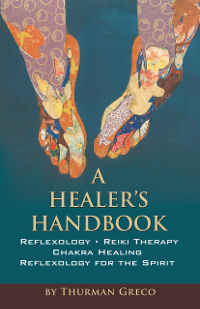
The second edition of this book is on the way! Thanks to all of you who are using this book.
Thurman
Ten Good Tips!
Can I offer you Ten Good Tips that will improve your life significantly and still be easy to adapt to your lifestyle?
I hope so! Well, they may not all be super easy to become a part of your life but don’t hit the escape button yet. Please just read these Ten Good Tips and see how many of them you already do and how many of them will be easy for you and how many will be a challenge.
I honestly believe this list is going to be easier than you think. Just, give it a try.
Please.
Drink a cup of tea each day and then drink seven more cups of water throughout your day.
Walk 10,000 steps a day. Actually, this may be a lot easier than you think. Many people already walk 10,000 steps daily. If that doesn’t work for you, try to walk for thirty minutes every day.
Can you quit smoking? Have you already quit smoking?
Every day, sit down and put your feet up. Get quiet for five minutes. That’s all.
Reach out to a friend every day. Just to say “hi” if nothing else.
Enjoy a piece of chocolate every day.
Sleep well.
Eliminate prefabricated foods from your diet. You know what I mean. The instant macaroni and cheese that I lovingly call “yellow death” and the canned chili with ingredient words no one can pronounce. And, don’t forget the peanut butter with an ingredient list that takes up half the label.
Switch over to olive oil based salad dressings to control cholesterol.
Skip sugary soft drinks and bubbly sodas that have sugar substitutes instead of sugar. Either way, your body won’t miss them.
Add blueberries to your diet to enhance your memory. I buy frozen wild blueberries in bulk to cut their cost. Wild ones actually have more nutrients which are found in the skins because wild blueberries are smaller than the farmed ones. I put them over plain yogurt. Love it!
I’ve added a couple extra items to the list so you’ll have a choice.
Thank you for reading this article!
Please refer this blog post to your preferred social media network.
Thurman Greco
The Second Edition of “A Healer’s Handbook” should be available within about two weeks! Thanks to every for your support of this book! Thurman
Still Can’t Sleep?

Still can’t sleep? It’s turning out to be a cold winter in Woodstock this year. But, still not as cold as one would think. The snow melts between the storms.
All these temperature ups and downs invite insomnia in some people. As many articles as I’ve written about sleep, there are always more tips waiting to find space on the blog post.
Still can’t sleep? Have you changed your pillow? If you find yourself awake at night and slugging it out with your pillow, it’s time to go to a store and find one that’s just right for you. There are so many kinds of pillows out there now that a person can get confused. Don’t give up. Think about the kind of pillow you need. You’ll find it!
Sip some mild tea as you relax yourself before going to bed. Give yourself an hour to slow down your systems, calm your brain and nerves.
Still can’t sleep? Try to eat your last meal of the day about three hours before you go to bed. If you are afraid you’ll be hungry, eat a banana before you go to bed.
Wear ski socks when you go to bed. Studies show that people sleep better if their feet are warm.
Have you moved your office out of your bedroom? If not, now is a good time.
What about your curtains? Heavier curtains block light and encourage sleep.
Finally, if you have read all these blog posts about sleep, and none of the tips seem to work for you…it might be time to try a sleep center and take a sleep test.
Thanks for reading this article.
Please share this article with your preferred social media. network.
I’ll be posting more regularly now that the reflexology book is going into it’s second edition and the hunger book is nearing the end. You’ll be reading about their availability soon!

Thanks.
Thurman Greco
Sleep, Glorious Sleep
 For a person struggling to sleep, it sometimes feels as if a good night’s sleep will never happen. Well, I don’t believe that. I’ve had too many client partners journey down the path to good sleep habits.
- Regular reflexology sessions really help. Begin with three reflexology sessions a week. After the first week, cut back to two sessions a week. Try to get two sessions a week for two months. Then, cut back to one session a week and continue with this weekly schedule until better sleep habits begin to be a part of your life. Then, you can cut back to a session every other week for awhile. Regular reflexology sessions definitely encourage sleep, glorious sleep.
- Self Reiki offers a better night’s sleep. Whenever you wake up in the night and think you’ll never be able to go back to sleep, spend a few minutes offering yourself a Reiki session.
- Write a sleep meditation for yourself which you can use when you are awake at night. Recite this meditation to yourself when you can’t sleep. Edit it over time until you feel you have it just right. In this meditation, you want to tell your muscles to relax so you can sleep. Tell your body that you are surrounded by a relaxing light that will encourage and support your sleep for the remainder of the night.
- If you feel hungry when you wake up in the middle of the night, fix a small snack for yourself. You don’t want to have an entire meal, or even a large snack, but a small serving of yogurt or a cup of a relaxing tea can coax you back to sleep.
- Try not to let yourself be overcome by worry. Sometimes urgent worry can keep you from returning to sleep when you wake in the middle of the night. Realize that the worry will seem smaller in the light of day.
- Do not let your thoughts control your night and your ability to sleep. After all, they are just thoughts. Let them slip away into the night.
- If you feel you cannot return to sleep, get out of bed and read for a few minutes. Then, maybe you will feel more like sleep when you return to bed.
- Gentle yoga before bed helps.
- Finally, give yourself permission to rest and to sleep.
Thank you for reading this blog post.
Please share this article with your favorite social media network.

Thurman Greco
Eight More Tips for a Good Night’s Sleep.
I can blog posts until the end of time and never overestimate the benefits of a good night’s sleep. A healthy night’s rest is one of the most important things a person can do to maintain a youthful appearance and lifestyle.
- Sleep Improves your Memory. As you sleep, your brain organizes your memories for you.
2. Adopt a Sleep Schedule. Try to go to bed and get up at the same time every day. As you work on your sleep schedule, allow yourself eight hours sleep in every 24-hour period. This can be a real help because your body will soon prepare itself to sleep in the evenings when it’s time to go to bed. Your circadian schedule will really help you out here.
3. Make your bedroom dark at night. It’s easier to sleep in a darkened room. The darker you can keep your bedroom at night, the better.
4. Check your meds. There are many meds which can interfere with your normal sleep. Check the meds you’re taking. Change out any meds and/or foods and beverages which might be the culprits.
5. Nothing is more likely to induce sleep than being in the dark. Night time is when we produce melatonin.
There are things we can do to encourage sleepiness. When night approaches, keep your lights down low and avoid overhead lighting. Use dimmer switches on lights and lamps.
While you are enjoying a calming evening in a darkened room, this is a good time to enjoy softened and restful music. Or, this is a good time to do some gentle yoga stretches. Or, this is a time to do some calming breathing. Finally, this is a good time to enjoy the cool stillness of the night air, the stars in the sky, a moonlit night.
But, whatever you do, include darkness as part of your nightly routine.
6. High Blood Pressure? Sleep helps lower blood pressure and elevated stress hormones. Get treatment.
7. Valerian has a reputation for improving sleep quality. Taken properly, this may work for you.
8. Anxiety, Depression, and Tension are three common causes of insomnia. If you think you suffer from one of these, get treatment. Treating your anxiety, depression, or tension may well take care of your insomnia issues.
As you try out these different tips, remember that getting from insomnia to a good night’s sleep is a journey. You’ll find things that work and things that don’t work. And, none of it will work or not work 100% of the time.
Thanks for reading this blog post. Please refer this article to your preferred social media network.
Thanks for reading the book.
Thurman Greco
Continuing Education: Self-Care for You, Reflexologist – 5

Do you attend continuing education classes, workshops, sessions throughout the year? If not, you’re missing out on the most important part of self-care.
Continuing education classes not only teach us new ideas, techniques, attitudes, postures…they stimulate our minds.
Continuing education classes offer emotional and spiritual stimulation.
Continuing education classes offer networking opportunities of a quality not found anywhere else.
Every continuing education experience is reflected in better work on your client partners.
In addition, continuing education classes usually offer a chance to receive and give body work while you’re learning.
You return to your table renewed and rejuvenated.
Continuing education classes offer you a chance to expand your service skills. I am a reflexologist. This is the work I offer my client partners daily.
I am also known for being a companion animal massage therapist, a Reiki master teacher. I have been attuned to nine different forms of Reiki. Finally, I read tarot cards.
I learned all of these skills on continuing education hours.
To be honest, I’ve studied things that I don’t practice but not one minute of the continuing education hours were a bust.
I am a much better practitioner, blogger, writer, teacher because of my fellow professionals who shared their knowledge with me through continuing education classes: Jonathan Rudinger, Penelope Smith, Dawn Hayman, Mary Ruth Van Landingham, Shoshana Hathaway, Tom Rigler, Rev. Dan Chesbro, Kerrith McKechnie, Marge D’Urso, Alberto Villoldo.
So, my message is this: enrich your life, expand your practice, get continuing education hours!
Thanks for reading this blog post.
Please share this article on your preferred social media site.
Thurman Greco
Release Your Clients: Self Care for You, Reflexologist – 4
At the end of each and every day, it’s important to release all the client partners you worked with, spoke with on the phone, booked future appointments for.
Release the person, the session, the issues, into the universe.
Throughout the day, you do what you can for your client partners. At the end of the day, It is time for them each to accept your healing and go back out into the world.
Each person and his/her issues are now separate from you until the next appointment.
Releasing your client partners at the end of each day is important for them as well as for you. For one thing, when a person comes for a session, it’s important that she/he become separate after the session. This separation promotes healing. .
One easy way to release your client partners is to cut the cords at the end of the day. An easy way to do this is to visualize the cords connecting you with your client partners. Now, take a pair of beautiful, golden scissors and snip them.
A second easy way is to offer a releasing meditation at the end of each day you work. You can write a releasing meditation to use just for this purpose.
A third way is to offer a releasing ceremony. To do this, simply write your own ceremony for releasing your clients. To end the ceremony, drape a special closing cloth over your healing table. Leave this ceremonial cloth on the table until you remove it when you return to work the next day.
A fourth way is to find a piece of music which signifies to you an ending. Play this music for a few moments at the end of each work day.
Smudging is also an effective way to end your day.
Essential oils are important also. Suggestions include frankincense, Idaho balsam fir, lavender, myrrh, palo santo, patchouli, and sandalwood.
Reiki is always appropriate for ending your day. A self-reiki session is a meditation in itself. Reiki the space you worked in all day.
So, here you have a selection of options to choose from. Over time, you may vary your releasing techniques. Experiment. Find out what works best for you.
Thank you for reading this reflexology article.
Please refer this blog post to your preferred social media network.
Thurman Greco
Self-Care for you, Reflexologist – 2
Working a full day is challenging. Only another body worker or healer knows what a day full of appointments means to you, the reflexologist – physically, spiritually, mentally, emotionally.
There are things you can do to minimize the fatigue encountered on just such a day.
One thing you can do that will help immensely is release the appointment when your client partner’s session comes to an end.
What you want is to release the person, the issues, the intention, the time spent to the universe.
When you do this, do not forget to “cut the cords” between you and the person to emphasize that the session is over.
You have done what you can for this person in the time allotted during the session. It’s time now for him/her to accept your healing efforts and return to the world.
Once you release the person, both the your client partner’s body and issues are gone from you until the next appointment.
The whole release may not take but a few moments. A suggestion is that you write a script for release and mentally repeat it as each client partner leaves your table.
If you are a ceremony person, you may write a ceremony of release to practice in your space at the end of each shift. This ceremony may include essential oils, smudging, prayer, Reiki therapy.
This releasing gesture seems easy enough but many people don’t do it. This release makes a difference in your health, your energy, your career.
Whatever you do, it’s important to release each and every client partner who comes to your table.
Thank you for reading this blog.
Please refer this article to your favorite social media network.
Jennette Nearhood provided the artwork for this blog.
Thurman Greco
Self-Care for You, Reflexologist
When you look at your calendar for the coming week…where are YOU on the schedule? If you are not on the schedule, you are not doing the basic self-care things things to protect your career. Self-care is the difference between a two-year career as a healer and a twenty-year career as a healer.
You are the healer. You join the professional organizations. You pay your taxes. You make sure your office is “just right”. You take continuing education classes. In short, you do the things necessary to protect your business.
But, what about you: your body, your spirit, your emotional strength, your thoughts? Where are they lined up here with the bills and the available appointments, and the marketing activities?
For many healers, body workers this is the most difficult thing to do on the entire list. As reflexologists, we’re accustomed to give, give, give. And, we enjoy giving. Obviously we enjoy giving or we would never have taken even the first class.
The bottom line here is that you commit to your own private, inner, personal wellness when you receive a weekly session. You also set an example for your client partners.
Things you can do!:
Begin by filling your spiritual tank. Schedule a session for yourself each week. Every week. Do something. Get a massage. Get a Reiki session. Schedule a session with a shamanic healer. Try out that new chiropractor who just moved into your neighborhood.
Do something! The important thing is to get on someone else’s table at least once a week.
Personally, I receive an hour-long Reiki therapy session every week…no matter what. I also receive a reflexology session every week. The work I do the rest of the week is much better for this hour which I invest in myself.
Thank you for reading this blog.
Please refer this article to your preferred social media network. Share this article with a fellow healer.
Thurman Greco