Use the reflexology you keep in your toolbox – Part 6
One nice thing I like about reflexology: it’s adaptable.
You don’t have to do a lot to prepare for a reflexology session. Don’t get me wrong. Your session preparation can be as elaborate as you can imagine and desire. It can include music, incense, essential oils, enfolding comforters, gentle lighting, and anything else you want to add to support your client partner.
But when the going gets tough, all you have to do is gently touch a person’s hands or feet for a few moments. Reflexology warm-ups and warm-downs are powerful. And there are few to no contraindications to touch a person.
And, a person doesn’t have to be lying by the side of the road to qualify for a gentle touch and nothing more.
Reflexology works well with other modalities. I love to add Reiki therapy and chakra healing but there are many more modalities that work fine. The choice is up to you.
On a gurney or roadside, I would certainly add Reiki but, honestly, it’s not necessary. Reflexology will do the job quite well.
Popular reflexology holds which are appropriate for gurney or roadside situations include simply holding the person’s hands or feet.
If I can’t make contact any other way, a hand placed on a shoulder can be effective.
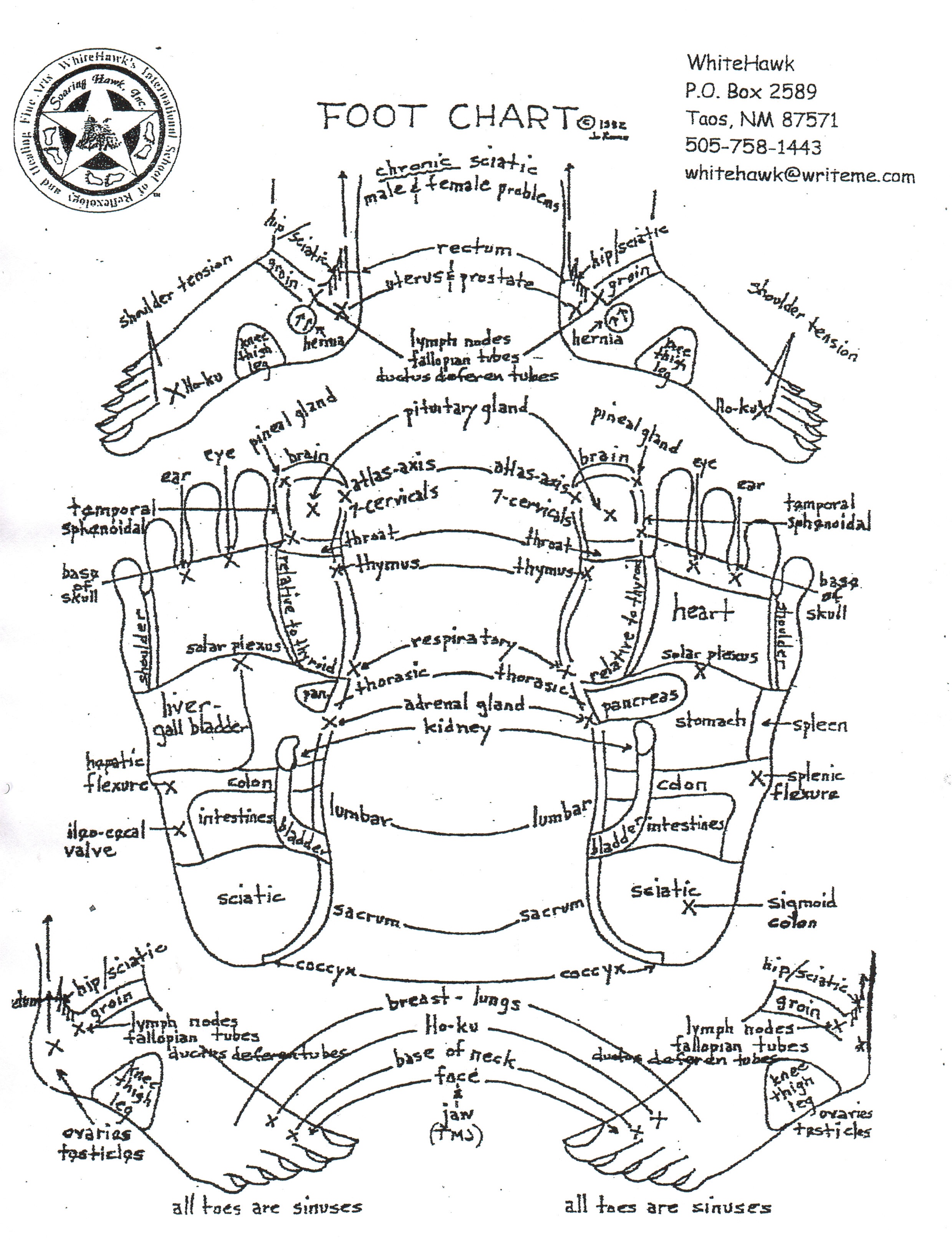
I like to begin a session with a gentle solar plexus hold. After that, I might hold the person’s heels to offer comfort and support. Gently holding a person’s lymphatic reflexes for a minute can bring calm.
And, truthfully, Reflexology’s job is to bring about homeostasis. This happens in a session, no matter the circumstances.
At your table, reflexology will generate a different result during each session. That’s because your client is different every day on a cellular level. This daily difference produces a unique outcome at every session.
But, no matter the circumstance, reflexology is a heavy lifter in your toolbox. It will not let you down. After a session, don’t waste even a minute thinking you should have done something else or touched the person’s feet or hands another way. Your hands did the right thing at the right moment for this person.
Thanks for reading this article. Please refer it to your preferred social media network.
THANKS!
Thurman
Healing Music – an important part of your toolbox – Part 5

Music is an important component of healing because everything has its very own musical component.
When we speak to one another (or to ourselves), our voices transmit a unique spiritual music. Each person’s voice is individual.
When we move, our bodies send a tempo representing our feelings at the moment.
Everything around us is musical because we are all composed of energy.
When we offer reflexology or Reiki therapy or chakra healing or any number of other healing modalities, each one has it’s own music. But, that doesn’t mean that an added layer of healing music isn’t important. The healing music you play while you heal a person contributes to that person’s wellness.
I have known healers who used only one or two musical selections for everyone. Other healers had stacks and stacks of cd’s to choose from.
I have also known client partners who preferred a specific song. One client partner wanted only a special song playing when she entered the healing room. She wanted nothing more. For her, healing began when she heard the music she chose. Her choice: “Nada Himalaya” by Deuter. New Earth Records produced this CD.
My thoughts on this: Whatever works for your client is the right choice.
The important thing is not whether I like the music or not. My preferences don’t matter. The important thing is that the person who needs and receives the healing responds positively to what she hears.
I have client partners who only want to hear chants. Others dislike the chants and don’t want to hear them. My job is to discover what music each client prefers and have it playing during each session.
If you don’t know what to offer, you can’t go wrong with some quiet Bach or Pachelbel. Music by Steven Halpern or Deuter have been staples in healing rooms for decades.
But, whatever you select, your choice is important, very important.
Not long ago, I lost a client because of the music I selected. This woman was a recent regular client – coming to my table weekly. She appeared to be happy with my services and healing modality environment.
She enjoyed a variety of music and I had enough CD’s to offer a different selection at each session. Then, one day, she walked into the healing room and immediately went on alert. She was even a little fearful. I didn’t know why.
Before the end of the session, she commented to me that I was playing her “favorite song”. The musician was not well known and only had one CD out. She revealed me that this love for the music we were listening to was a deep dark secret that she had never shared with anyone.
I had, inadvertently, invaded a private space she was not prepared to share.
Do I need to tell you what happened to this client?
Every client has a private space where no one can be invited in. One of the jobs of a healer is to find the door, make sure it’s locked, and throw away the key.
The music you share in your healing space is as intimate as the work you do.
Thanks for reading this blog article! Please share it with your preferred social media network.
Thurman Greco
Feel good about your feet!-Healing tools in your toolbox. – Part 4

Once you see the soles of your feet as more than just the bottoms of your feet, you find your soul. You have a better understanding of the path you travel to a deeper consciousness.
I’m a reflexologist, teacher, writer, speaker, dowser. And, whether I heal, teach, write, speak, or dowse, my intention is the same.
I want us all to become more conscious of our unique selves.
I want us all to take charge of our own healing.
I want us all to release things we don’t need anymore. This will make room for changes that are important for our current time and place.
As we journey through life, we discover things about our selves that we never knew. We rediscover things we once knew but forgot. And, finally, we see things about our selves which we may have felt weren’t important but now realize they are.
My job is to help you find your feet.
Once you see the soles of your feet as more than just the bottoms of your feet, you find your soul. You have a better understanding of the path you are traveling to a deeper consciousness.
After awhile, everything falls into place. For some, this shortens the journey. For others, it takes months or even years.
Historical references to our feet as healing conductors can be found in the Physicians’ Tomb in Saqqara, Egypt in wall paintings dating back almost to 2400 BCE.
Ancient Chinese writings describe pressure points on thumbs and toes.
The Medicine Teacher Temple in Nara, Japan has stone carvings of Buddha’s feet.
In India, Vishnu paintings highlight points corresponding to reflexology points on feet.
Ayurveda medicine incorporates foot reflexology.
When I work a person’s feet, I feel as if I’ve opened a book filled with stories, all waiting to be told. This is the Language of Your Feet.
But, many of you already know this. You practice reflexology, or some other healing modality, either as a hobby or as a profession.
But, however we describe our Reiki therapy, our healing modalities, our Yoga classes, our music, our meditations – let us never forget: These are tools to use throughout life. They exist to get us through the tough times, the crises. They “get us down the road” as my grandmother used to say.
I’m so grateful we have these tools!
Thank you for reading this article. Please share this post with your favorite social media network.
Thurman Greco
Practicing Reiki-Part 3

When I enrolled in my first Reiki therapy class, I was primarily interested in learning something I was curious about. A massage therapist, I regularly participated in continuing education programs. I liked to learn new things to use in my healing practice. Reiki therapy interested me because it was so hidden in my area.
I learned Reiki therapy was easy to use, and extremely adaptable. In short, I loved Reiki.
For the next few years, I was in a Reiki therapy class somewhere learning something at every opportunity. I liked to tell my classmates that I loved Reiki therapy classes and somehow the universe saw to it that I had enough $$$ to pay for every class I signed up for and that my car had enough gas to get me there.
But, not everyone who studies Reiki therapy is a massage therapist seeking continuing education credits for annual certification.
Whether healing professionals or not, a question in every student’s mind was “What am I going to do with my new skills?”
Reiki therapy is a keeper skill. Once you receive an attunement, it stays with you – whether or not you consciously use it. Reiki accompanies you on your life path.
Reiki helps you create your life story. Because each of us experiences a unique life journey, Reiki therapy is different and inique for each of our needs. No two people experience Reiki in the same way.
If you received a Reiki attunement 20 or 30 years ago, you still use it.
Books were few and far between when I learned Reiki. Today, Reiki books are everywhere it seems. You have the luxury of picking up any Reiki book that attracts you.
We can all thank Diane Stein for that. Diane Stein changed the game in the healing world when she wrote a memoir/expose about her career as a Reiki Master. “Essential Reiki” is probably still found in book stores and libraries today.
I have a suggestion for you if you are attuned to Reiki and are not sure what to do next:
Get yourself a spiral notebook, or bound journal, or whatever.
Get yourself an appointment book or calendar.
Call around and tell people you have learned Reiki therapy and are doing your clinicals. Schedule 100 sessions.
Include your hairdresser, neighbors, friends and anyone else who might take you up on your offer. Find five people with health issues. This can include things like MS, headaches, allergies, low thyroid, cancer.
These five people will receive five Reiki sessions as close together as you can schedule them.
Everyone else receives one or two sessions.
Record each session in your Reiki journal. Include the person’s name, address, contact information, and a short description about the session.
At the end of these 100 sessions, you will have learned much about Reiki, yourself, healing, and life.
Join or start a Reiki circle. In a Reiki circle, you’ll meet new people and share Reiki on a regular basis.
But, what if you don’t want to do any of these things?
Your new-found Reiki therapy skills are with you – assisting you throughout each day. You carry the Reiki energy with you every where you go on your life journey.
How cool is that?
Thank you for reading this article. Please refer it to your favorite social media network.
Thurman Greco
A Reiki Practitioner’s User Manual – Part 2
When I studied Reiki, Mary Ruth Van Landingham’s classes and handouts were my user’s manual. They didn’t even begin to approach all the things Reiki can do for us all. I think Mary Ruth Van Landingham did that intentionally because we each write our own user’s manual.
Reiki is a unique and individual experience for each of us. Our attunements are the user’s manual for each of us.
I learned to practice Reiki on my massage therapy clients. Each one got a 10-minute Reiki boost at the end of the massage therapy session. Because Reiki was still unknown in my area, none of them had ever heard of Reiki. Their introduction to Reiki came during the last ten minutes of a massage therapy session so it came at a moment when they were blissed out, pain free, and totally relaxed. Needless to say, they all loved their Reiki.
This was good for me also because I was new to Reiki and was fearful about the results. It took a while for me to become accustomed to how Reiki worked.
I worried that they might not receive a proper introduction. So, what happened was that both my clients and I learned together. For starters, we learned to recognize my warm hands when I introduced Reiki into a session.
Over time, I learned that my hands warmed up whether they were on another person’s body, or my body, or a plant, or a car. Or whatever.
I learned to trust Reiki. This was a huge life lesson for me. I suspect it is also an important lesson for others as well. Many people go through life never learning to trust people, places, or things.
When I teach Reiki, I don’t think I even mention the word trust. The word floats above the classroom like a gorgeous cumulative cloud. It’s there for all to see.
A wonderful thing to do is practice self-Reiki to experience a regenerative sleep, easy your headache pain, feel comfortable in your body, or simply feel grounded.
Actually, it’s not necessary to do anything with Reiki. Just enjoy having received your Reiki attunement(s). Rest. Heal. Let Reiki be with you.
You do not give up anything to learn Reiki. Reiki does not test you in any way. Reiki is not a cult. It does not come between you and your religious beliefs. You do not need to change any of your core beliefs.
Instead, Reiki opens doors and windows of learning, opportunity, and enlightenment for you…if that is what you want. For some, changes are apparent, immediate, and outward. For others, changes are slow, careful, discreet. It all depends on you, your situation, your life path.
Some students, after receiving their attunements, internalize their new skills. Reiki is private, intimate, internal.
Other students use their newfound skills, practice Reiki and give sessions at every opportunity.
Neither way is better than the other. In all cases, Reiki assists you on your path. For me, there is nothing more beautiful than to travel one’s life path.
Thank you for reading this blog post. Please refer it to your preferred social media network.
Thurman Greco


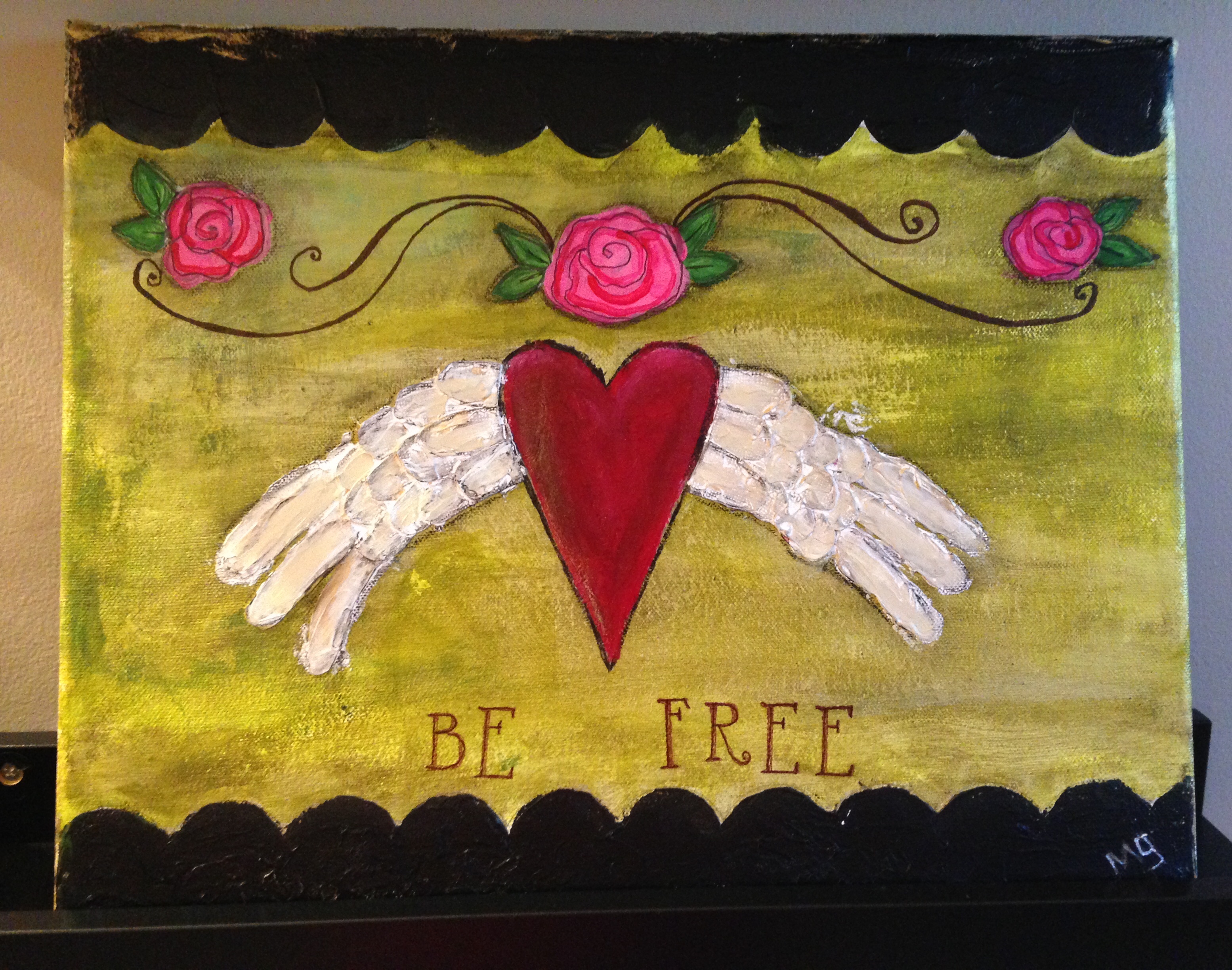
heart with wings
Guided Meditations get you to the next level in your sessions.

I learned about guided meditations in Mary Ruth Van Landingham’s classes at Terra Christa in Vienna, Virginia. She always included a guided meditation as part of each learning experience.
When Rev. Dan Chesbro taught a class at Terra Christa, he always included a guided meditation. Looking back on his sessions, I see now they were guided meditations in and of themselves.
I bought three books at Terra Christa: “Meditations for Awakening”, “Meditations for Transformation”, and “Meditations for Healing” by Larry Moen. These books became part of every work day, whether I was teaching or healing.
The influence of these books on my career was significant.
As a matter of fact, I wore out the Awakening book and had to buy another to replace it. The other two need to be replaced now.
I’ve bought other guided meditation how-to books over the years.
Two that stand out include “Guided Imagery for Groups” by Andrew E. Schwartz and “Himalayan Salt Crystal Lamps for Healing, Harmony, and Purification” by Clemence Lefevre. I’m including them in this list because they are interesting and helpful. Each book shows how different and honest guided meditations can be.
These 2 books each have a different approach to guided meditations. Through the years, even though I wore out the Larry Moen books, it was important to me to expand my boundaries and use different information. That’s how I learned.
Somehow, my learning path included one short class about writing my own guided meditations. I took an End-of-Life Class at the New York Open Center. Henry Fersco-Weiss taught this class over a weekend. He included a short instruction about creating a guided meditation. It was all I needed.
I knew after that short segment that I could do this on my own. Even though I’ve written many guided meditations, I always return to Larry Moen’s books. Specifically, I like to select “Lagoon” on page 20 of “Meditations for Awakening.” I always go to this meditation in my Reiki 1 classes.
But, when you get into guided meditations, the choices are many.
I hope you’ll be motivated to incorporate guided meditations at every opportunity.
Thanks for reading this article.
Please refer it to your preferred social media network.
Thurman
Your Own Guided Meditation: Relax and Enjoy the Journey

A guided meditation awakens, transforms, heals. It creates a journey so you can fulfill a purpose or reach a goal or answer a question of some kind. In short, a guided meditation helps you solve a problem you may be experiencing.
Many guided meditations use quiet, calming music to support your journey. I like music which doesn’t have abrupt changes. Whatever music you use, you need something which will not interfere with your visualization.
Guided meditations work well in groups with one person reading or speaking the meditation aloud. They also work well for a person alone who reads the meditation or who is listening to it on an audio device.
The best time for a guided meditation is whenever or wherever it works best for you.
Don’t worry if you feel you have fallen asleep during your meditation. Usually, you have not.
Pauses guide and pace the journey. They can occur throughout a meditation. How many, and how long each one is depends on the meditation and the group. I like to schedule the pauses in the meditation when I design it. .
Breathing tempo is established at the beginning of each meditation. Many people do not breathe deeply enough. Although shallow breathing is common, meditations call for deeper, slower breathing. Belly breathing is part of the event. I set the breathing tempo early in the meditation.
A first step in a guided meditation is to spend a few moments encouraging your recipients to get comfortable. Try not to rush this part. Many people are not comfortable in their bodies and may not recognize when they are comfortable – not for a few moments anyway.
Then, the scene emerges. This can be in a secret room, in a meadow, on the edge of a lake, an the foot of a mountain. The scene is described. Meditation recipients are often invited to add their own details mentally as they listen to the unfolding journey.
After the introduction which sets the scene, the meditation generally involves a journey…walking down a path, riding a canoe on a lake, taking a trip on a balloon. Again, a few moments are taken to include details. Descriptive paragraphs tell the story as it unfolds. And, again, your meditation recipients are often invited to add their own details through their thoughts.
Sometimes, a guided meditation may introduce a character – an angel, a wise elder, one’s inner child. This character’s job is to listen to any questions a person may have and offer an answer or response which may be received during the meditation or at some time later in the day or even the next day.
With a guided meditation, you and your recipient’s job is to relax and enjoy the journey. You reach your destination when you receive an answer or solution.
The final step allows a recipient to slowly return to the present moment knowing that she can return to the meditation at any time. There is no rush.
Assure your recipients that they can return to this meditation whenever they desire. It is time to stretch, yawn, open eyes, and return to the present moment.
heart with wings
Thank you for reading this blog post. I hope you enjoyed it.
Please forward this article to your preferred social media network.
Thurman Greco
Wellness and Healing for Ourselves and Our Planet During the Spring Solstice
To promote wellness and healing throughout the planet, and on March 19th, find a time and place that fits your schedule.
Sit quietly for a few moments and visualize a world where positive renewal and growth exists for all beings. Allow wellness and healing to become a reality for all.
Plant spiritual seeds to nurture your goals and dreams. Get to know your potential and reflect on all the wonderful opportunities in the world for growth and hope throughout our planet.
Set an intention honoring this mystical and magical change of seasons creating space for your spiritual growth.
Check in with yourself now. Give your spirit the support it needs and seeks to bring wellness and healing to all beings on our planet.
Quiet your mind as you bathe in this new energy of spring. Invite universal balance into our world.
Thank you
Thurman Greco
Please refer this article to your preferred social media network.
How Stressed Are You Anyway? 6 Common Responses to Stress and What You Can Do About Them.
How does your stress add up for you? Are you more stressed than usual? Are you more stressed than your friends and family?
Does everything seem to be an emergency? In other words, is your stress becoming out of control? Do you feel as if you need to see a professional for help controlling your stress response?
Is getting back and forth to work stressful for you? Is your work situation stressful? Many of our stress responses can be planned for and, hopefully, controlled.
If you develop the habit of staying tuned to your body, you can become aware of upcoming stress before things get out of control. Your physical body will send you signals. What are they?
DO YOU CLENCH YOUR MUSCLES? This is easy to check out. Begin by checking your body for clenched muscles. Begin at the top of your head and work your way down to your toes. Favorite stress spots for many people are jaws and teeth, neck and shoulders, fists, lower spine, and feet.
DO YOU GRIND YOUR TEETH? Many people do this when they are stressed. This habit carries over to your sleep for some.
DO YOUR HANDS GET COLD? Generally speaking, your cold hands indicate a stressed body. To test whether your hands are cold or not, hold one of your hands on your neck. If it is cooler than your body, you are probably stressed.
ARE YOU SWEATING? It can be that you are overheated. But, sweating can also be an indication that you are stressed. As humans, we sweat when we are in a protection mode. If you find yourself sweating, ask yourself what is causing this situation.
IS YOUR PULSE RACING? If you are not exerting yourself and your pulse is racing, you are most probably stressed. What is happening?
DO YOU REWIND THE SAME THOUGHT ENDLESSLY? This is a common human condition. When we are upset about something, we rewind the same concern for minutes, hours, days. Like a stuck record, we think about the same thing over and over and over.
A good thing to do is realize that you have a situation upsetting you. Once you realize what the cause may be, you can seek a solution.
Can you brainstorm with a friend or colleague to find a solution. For example, you may have a difficult commute to and from work. Can you take a bus or train instead of driving?
It may be that your situation is too much for you to handle alone and you need to seek professional help to identify your stressor and then deal with it. If that is the case, go for it! You will be much better off when you find a solution to your problem.
Meanwhile, there are a couple of generic things you can do which will help until you begin your therapy. These things include
MEDITATION – Spend a few minutes each day meditating . This should help you cope with your situation while promoting a positive attitude. You can take a meditation class or find or write guided meditation focusing on your situation.
Either way, meditation promotes homeostasis which can only help because it promotes the balance of all your body systems.
TAKE INVENTORY DAILY. A good thing to do is to take an inventory daily of the things in your life which might affect you today. This inventory will help you prepare for all the little things which add up to stress. This inventory will include things which are not necessarily major sources of stress. But they are there – waiting to happen. Being aware of them in advance helps.
With a little practice, this inventory can help reduce your stress levels daily. More tips will follow in future blog posts. Your goal is to try them out and choose the ones which work best for you.
Thank you for reading this article. Please refer it to your preferred social media network.

9 Things You Can Do for a Healthy New Year – Wellness!
These nine suggestions can transform your body, your kitchen, and your lifestyle. They are a living proof that wellness is not hard to achieve.
So, in this new year, GO FOR WELLNESS!
EAT MORE FRUITS AND VEGETABLES
This is far easier than you might think.
Raw fruits and veggies are a good snack. Cooked, they can be a main dish or side serving. They can be a dessert, even! So, go for it.
EAT MORE WHOLE GRAINS
Foods made with white flour are lacking. They lack fiber, minerals, and other beneficial nutrients which you need. They also taste better!
USE CANOLA OIL AND ORGANIC EXTRA-VIRGIN OLIVE OIL
Replace all the other oils in your kitchen with these oils. Especially get rid of partially hydrogenated oils.
TAKE YOUR VITAMINS
This can be an overwhelming proposition. A good start is to ask your healthcare professional for guidelines. Or, contact Village Apothecary in Woodstock, New York, for some pointers. I get all my vitamins and supplements at Village Apothecary.
If you’re not comfortable calling Village Apothecary, find a place where you feel comfortable that the staff are well-trained and have customer wellness at heart.
If you like research, a third option is to study about one vitamin a month and add the vitamins or supplements monthly.
AVOID HIGH-FRUCTOSE CORN SYRUP
This is not a new piece of information. I’ve been writing and talking about this for years. But, this product is still in foods we buy. To really get away from it, read the fine print.
Go ahead. Do it. Read the fine print.
Then…once you’re doing this….
CUT BACK ON PROCESSED FOODS
Processed foods are loaded with products which aren’t even foods at all. These products shouldn’t even be in your kitchen, let alone in your body
Healthy food is not that difficult to find. In fact, it can be easier than you think.
EAT ORGANIC FOODS
Do this as much as possible. If the organic foods price tags in the grocery store give you sticker shock, focus on the “dirty” foods: strawberries, spinach, peaches, celery, greens.
It’s easy to wash pesticides off your produce. Put about 1/4 teaspoon of Dr. Bronner’s Soap (I use Peppermint) in a bowl of water. Dunk the produce in the mixture and swish it around in the bowl. Rinse the produce in clear water.
CUT OUT THE ALCOHOL, FIZZY DIET DRINKS, SODA POP.
Cut back, preferably to zero consumption. If this seems impossible to you, then you need to think about what these beverages mean to you. On the practical level, they do nothing good for you.
CUT BACK ON DARK MEATS.
Meats are not that good for us, really. Today’s beef, pork, and processed meats are loaded with chemicals, pesticides and herbicides.
Yech!
Thank you for reading this article! Please refer it to your preferred social media network.
Thanks again
Thurman Greco